

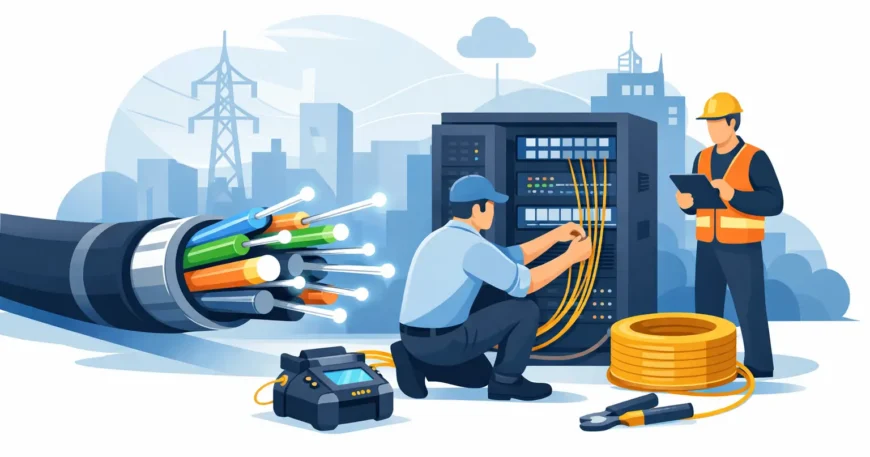
If you are looking up how to install fibre backbone, chances are the job is bigger than a single cable run. You are either connecting multiple floors, joining buildings, upgrading an older site, or putting in the core network that everything else will rely on. That matters, because fibre backbone work is not just about pulling cable. It is about designing a path that stays fast, stable and serviceable long after the installers leave.
For most properties, the backbone is the part of the network that links key distribution points. In a small office, that may mean connecting the comms rack to another area of the building. In a warehouse, it often means linking offices, production space and CCTV locations. In apartment buildings and mixed-use sites, it can mean running fibre from the main equipment room to risers, floor distributors or individual sections of the property.
What a fibre backbone installation actually involves
The simplest way to think about it is this: horizontal cabling serves devices, while the fibre backbone connects the network’s major nodes. That includes server rooms, comms cabinets, IDFs, MDFs and sometimes separate buildings on the same site.
Because of that role, backbone fibre needs more planning than standard data cabling. The route, fibre count, splice locations, termination hardware and testing standards all affect future performance. If one part is undersized or badly routed, the whole site feels it.
That is why experienced installers start with the building layout and the client’s actual use case, not with a reel of cable. A warehouse with heavy machinery has different routing needs from a high-rise retrofit. A new commercial fitout gives you cleaner access than an occupied apartment building. The right installation method depends on the site.
How to install fibre backbone without creating future problems
A good backbone installation starts with a site survey. Before any cable is ordered, the installer should identify where the main service enters, where the core network equipment will live, how many intermediate distribution points are needed, and what pathways already exist. Ceiling space, risers, conduits, tray systems and wall penetrations all need to be checked.
This is also where practical issues come up. Are there fire-rated walls that need compliant penetrations? Is there enough room in the existing riser? Will the route pass near electrical infrastructure or mechanical services? In older buildings, what looks workable on paper can be slow and expensive once the ceiling opens up.
Cable type is the next major decision. In most backbone jobs, the choice is between single-mode and multi-mode fibre. Single-mode is generally the better option for longer distances, higher bandwidth demands and future expansion. Multi-mode can still make sense for shorter internal runs where equipment compatibility and current budget matter more than long-term headroom. There is no universal answer. The right choice depends on distance, hardware and what the site may need in three to five years.
Fibre count matters as well. One of the most common mistakes in backbone work is installing only what is needed today. That may save money at the start, but it can become a costly limitation later. Adding spare strands is usually much cheaper during the initial install than revisiting the route after the site is occupied.
Route design comes before cable pulling
Once the pathway is confirmed, the route should be planned in detail. That includes entry and exit points, bends, support methods, patch panel locations and cable protection. Fibre is durable when installed correctly, but it is less forgiving than copper when it comes to bend radius, pulling tension and physical handling.
In commercial and multi-dwelling work, neat routing is not just cosmetic. A well-supported, labelled backbone is easier to maintain, upgrade and fault-find. A rushed job hidden above a ceiling may work on day one, but it often causes trouble when other trades move through the same space later.
If the installation runs between buildings, external conditions become part of the design. Underground conduit, direct burial requirements, moisture resistance and lightning isolation all need to be considered. For separate structures, fibre is often the right call over copper because it handles distance better and avoids electrical grounding issues between buildings.
Termination and splicing need to match the site
There are two common approaches at the ends of a backbone run: direct termination and splicing to pigtails within fibre enclosures. In many professional installations, splicing is preferred because it gives better consistency and protects the cable within proper hardware. It also supports cleaner patching into the active equipment.
That said, the best method depends on the environment, cable type and budget. A compact office fitout may be fairly straightforward. A larger site with multiple cabinets, staged construction or future expansion usually benefits from a more structured enclosure and patch panel setup.
What should never be treated as optional is proper fibre management. Slack storage, bend protection, enclosure choice and clear labelling all matter. Backbone links are critical infrastructure. If a cabinet becomes a tangle of unmarked patch leads and poorly stored fibre, every future service call takes longer and costs more.
Testing is part of how to install fibre backbone correctly
A fibre backbone is not finished when the cable reaches both ends. It is finished when it has been terminated, labelled and tested. Testing confirms that the link performs to standard and that there are no hidden issues from installation damage, dirty connectors or poor splices.
Basic continuity is not enough. A proper job should include insertion loss testing, and in many cases OTDR testing as well, especially on longer or more complex runs. These tests help verify splice quality, connector performance and any faults along the route. For clients, this is the difference between assuming the backbone is good and actually knowing it is.
Documentation matters just as much as the test result. Each fibre should be identified, each endpoint should be labelled clearly, and the final layout should be recorded so future additions do not become guesswork. This is especially important in offices with multiple cabinets, apartment buildings with stacked risers, and warehouse sites where equipment can shift over time.
Common mistakes in fibre backbone projects
The biggest issues usually start before installation day. Poor planning, undersized fibre counts and vague equipment room layouts are common problems. So is treating backbone work as if it were just another cabling run.
On site, the usual failures are avoidable. Cables get pulled too hard. Bend radius is ignored in tight ceiling spaces. Pathways are shared with services that should have been avoided. Cabinets are left without enough room for patching or growth. Testing is skipped or reduced to the bare minimum.
Retrofit projects deserve special mention here. Existing buildings often look simple until you deal with blocked conduits, inconsistent wall construction, inaccessible ceiling cavities or occupied tenancies. In those jobs, experience matters because the install plan may need to change quickly without sacrificing standards.
Where professional installation makes the biggest difference
If you are working on a single straightforward run inside a small premises, the process may be relatively clean. But once the site involves multiple floors, tenancy divisions, warehouse space, live business operations or MDU infrastructure, fibre backbone installation becomes a coordination job as much as a cabling job.
That is where a practical contractor earns their place. The work needs to be planned around access, staged carefully, installed neatly and tested properly. The result should not just pass on paper. It should support your internet service, internal network, phones, cameras and future expansion without needing to be redone.
For property managers and owners, that also means thinking past the immediate project. A properly installed fibre backbone can improve tenant appeal, support owner-controlled internet models, and reduce the cost of future upgrades. For businesses, it can remove bottlenecks that affect daily operations. For homeowners with large properties or detached buildings, it can create a far more reliable connection than trying to stretch copper where it does not belong.
Georgia Technical Services handles this kind of work with the practical approach it requires – clear planning, professional installation and backbone infrastructure built for real-world use, not just a quick handover.
The best time to get a fibre backbone right is before the ceilings are closed, the cabinets are full and the complaints start. If the network is meant to support the whole property, treat the backbone like the critical infrastructure it is.


1 Comment
💳 + 169.20 USDC ->> graph.org/BALANCE-3682444-USD-04-21-3?hs=3bdc1c0c9df1f5309ea8d487cecc3ac7& 💳
il94br