

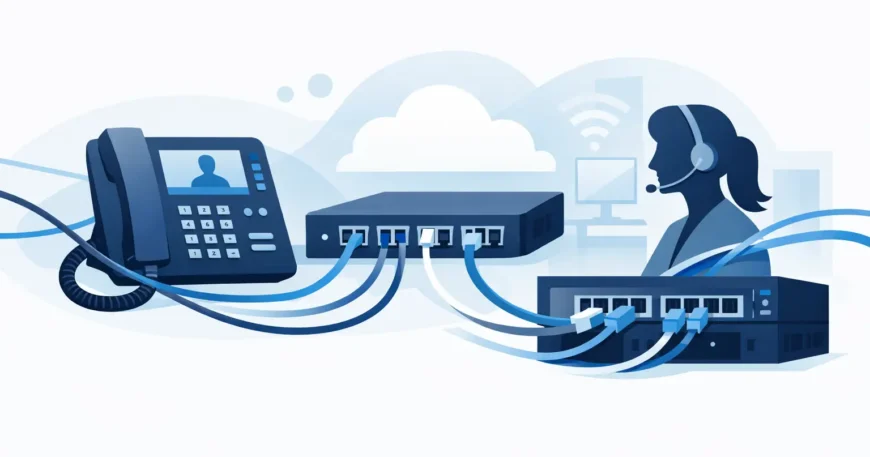
A lot of VoIP call problems get blamed on the phone system when the real issue is sitting behind the wall. If your voip phone system cabling is outdated, poorly terminated or patched through a messy mix of old phone lines and data runs, you can end up with dropped calls, jitter, dead ports and constant troubleshooting that wastes time.
For offices, warehouses, apartment buildings and even larger homes, cabling is the part that decides whether a VoIP setup feels reliable or frustrating. The phones may be modern and the internet service may be fast, but if the physical layer is wrong, the whole system becomes harder to manage. Good installation keeps things simple, scalable and easier to support later.
What voip phone system cabling actually includes
VoIP phones run over your data network, so the cabling is usually structured cabling rather than traditional telephone wiring. In most cases that means Cat5e or Cat6 cable runs from a communications rack or network switch to wall outlets or desk locations where phones will be connected.
That sounds straightforward, but there are a few moving parts. The cable itself matters, the terminations matter, the patch panels matter and the switch capacity matters. If phones are powered using PoE, the switching hardware also becomes part of the cabling conversation because it affects how each endpoint receives power and network access.
In smaller offices, the same run may support a desk phone and a connected computer, depending on the phone model. In larger spaces, it often makes more sense to cable each workstation properly and avoid daisy-chaining where possible. Both approaches can work, but the right option depends on bandwidth needs, desk layout and how often the space changes.
Why old phone wiring usually is not enough
A common mistake is assuming an existing analogue phone layout can simply be repurposed for VoIP. Sometimes parts of it can, but often it cannot. Traditional voice cabling was built for a different job. It was never designed to carry modern network traffic with the consistency a business-grade VoIP system needs.
Older buildings are where this shows up most. You may find mixed cable types, undocumented runs, poor joins above ceiling tiles or wall plates that no longer match what is patched in the cabinet. That can make migration look cheaper on paper if you try to reuse everything, but more expensive in practice once faults start appearing.
For retrofit work, testing first is the smart move. Some existing cable can remain in service if it meets standard and has been installed properly. If it does not, replacement is usually the better value rather than trying to build a reliable phone system on top of unreliable cabling.
Cat5e or Cat6 for a VoIP phone system cabling project?
For many VoIP installations, Cat5e is still serviceable. It can support phone traffic without trouble in a lot of environments, especially for smaller offices with modest network loads. That said, Cat6 is often the better long-term choice when you are installing new cable.
The reason is not that VoIP itself needs extreme bandwidth. Voice traffic is relatively light. The benefit of Cat6 is that it gives you more headroom for the broader network, better support for multi-use outlets and a cleaner upgrade path if the same infrastructure will also carry data, wireless access points, cameras or other IP devices.
In commercial spaces, new builds and fit-outs, Cat6 is usually the sensible standard. In residential projects, it depends on budget, scope and whether the wiring will support only phones or a wider home network. In MDUs and high-rise retrofits, future capacity matters even more because opening walls again later is where costs rise quickly.
Planning matters more than most people expect
Cabling for VoIP should not start with a box of cable and a rough sketch of desk locations. It should start with how the site actually operates. How many users are there now? How many are likely in 12 to 24 months? Will staff move around? Are there shared work areas, reception points, warehouse stations or lift phone requirements? Is the building likely to add access control, CCTV or more wireless coverage later?
A proper plan prevents underbuilding. It also stops overbuilding where it is not needed. Some sites need a full rack, patch panels, labelled drops and managed switching across multiple rooms. Others need a smaller, tidy setup that still leaves room for growth. The right design is practical, not excessive.
This is especially important in multi-tenant and apartment environments. A property owner might be thinking about unit connectivity, intercoms, common area communications and internet distribution at the same time. In that setting, phone cabling is part of a larger infrastructure decision, not a stand-alone job.
The problems poor installation creates
Bad voip phone system cabling does not always fail on day one. Sometimes it works just well enough to pass a basic test, then causes intermittent faults that are harder to pin down later. Those are the jobs that create the most frustration because the issue looks random.
You might see phones rebooting due to unstable PoE, calls breaking up during busy periods, links dropping when a patch lead is touched or users losing service after an office move because nothing was labelled properly. In many cases, the cause is simple – poor terminations, patching shortcuts, low-quality cable, tight bends, interference, or cabling installed without any real testing.
These faults cost more than the initial shortcut saved. Staff lose time, tenants complain, customers hear poor audio and support becomes reactive instead of controlled.
What a professional installation should deliver
A professional VoIP cabling job should give you more than working dial tone. It should leave the site organised, documented and ready for support. That includes correctly selected cable, tested terminations, tidy cabinet work, labelled outlets and a layout that makes future changes easier.
For business sites, that usually means separating the cabling work from guesswork. Phones, data, Wi-Fi, surveillance and paging can all share the same structured approach, but they still need proper design. A clean install makes it easier to isolate faults, add users and hand the site over to IT support without confusion.
For homeowners, the same principle applies on a smaller scale. If you are wiring a renovation, home office or larger residence, it makes sense to install structured cabling once and do it properly. Even if your current focus is a phone line or internet calling setup, the same outlets may later support workstations, mesh access points, cameras or streaming devices.
When to upgrade instead of patching around the issue
There are times when a small repair is enough. A damaged patch lead, one failed outlet or a switch issue does not always mean a full recable. But if the site has recurring faults, old mixed-standard cabling, limited capacity or no clear documentation, patching around the issue usually turns into an ongoing expense.
An upgrade makes more sense when the cabling cannot support current needs, when office layouts have changed significantly, or when the business is already adding more IP-based systems. It is also worth considering during a fit-out, renovation or tenancy change, because access is easier and disruption is lower.
That is where a single contractor with low-voltage and network infrastructure experience can save time. Instead of treating phones as one isolated task, the whole site can be assessed as one system – voice, data, wireless, cameras, racks and backbone included.
The value of getting it right the first time
VoIP is often sold as a flexible, cost-effective phone solution, and that part is true. But the flexibility comes from having the right network underneath it. If the cabling is sound, moves and changes are easier, outages are less likely and the system scales without turning into a patchwork of temporary fixes.
That matters whether you run a small office, manage a warehouse, oversee a multi-dwelling property or want a cleaner home network setup. Reliable cabling is not the flashy part of the project, but it is the part that supports everything else.
If you are planning a new installation or trying to sort out recurring call and network issues, start with the wiring. A phone system only performs as well as the cable and infrastructure behind it, and getting that part right saves money, time and headaches down the track.

