

If your Wi-Fi drops out in the back bedroom, your cameras lag, or your smart TV buffers when everyone is home, the problem often starts behind the walls. Residential low voltage wiring gives your home the backbone for stable internet, better security, clearer communications and fewer day-to-day frustrations. It is the part most people do not see, but it has a direct effect on how well modern homes actually work.
For homeowners, builders and renovators, this is not just about adding a few cables. It is about planning the right infrastructure before plaster goes up, or upgrading an existing home without creating unnecessary mess or cost. Done properly, low voltage wiring makes a home easier to live in now and easier to adapt later.
What residential low voltage wiring covers
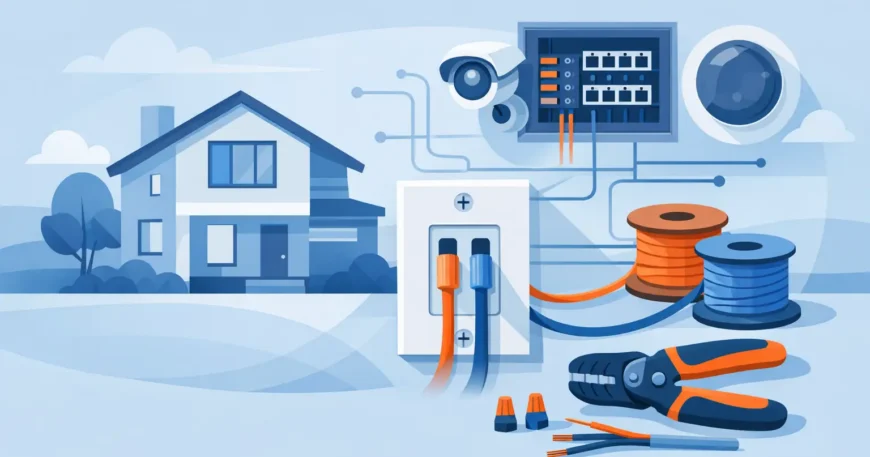
Low voltage wiring refers to cabling that carries data, audio, video and control signals rather than standard electrical power. In a residential setting, that usually includes Ethernet cabling, telephone and VOIP lines, CCTV and IP camera cabling, intercoms, alarm wiring, audio distribution and smart home control lines.
In practical terms, this is the wiring that supports your internet connection, home office, streaming devices, door stations, security cameras and connected systems. It can also include fibre runs in larger homes or multi-dwelling properties where stronger backbone performance is needed.
The reason this matters is simple. Wireless technology is useful, but it is not a complete substitute for structured cabling. Wi-Fi strength changes from room to room. Thick walls, metal framing, appliances and competing devices all affect performance. A hardwired connection does not have that problem.
Why more homes are being wired like small commercial sites
A typical household now has more connected devices than most offices had years ago. Laptops, gaming consoles, smart televisions, wireless access points, cameras, doorbells, tablets, speakers and work-from-home setups all compete for bandwidth. When everything is left to a single router in one part of the house, performance becomes inconsistent.
That is why more homeowners are choosing structured residential low voltage wiring rather than relying on patchy wireless coverage. A properly designed system gives each key location a dependable connection point. That might mean Cat6 to a study, living room, theatre room, ceiling access points and camera positions around the exterior.
This approach also suits homes that are being built or renovated for resale. Buyers expect strong connectivity. A house with clean, labelled cabling and sensible network layout is easier to market than one that depends on repeaters and extension devices scattered through hallways.
The biggest benefits of doing it properly
The first benefit is performance. Hardwired Ethernet is faster, more stable and better suited to bandwidth-heavy tasks such as video calls, 4K streaming, gaming and network storage. If you work from home or run a business from home, that reliability matters.
The second is security. CCTV, video door stations and alarm components perform better when cabling is professionally installed and terminated. You reduce signal issues, avoid poor-quality DIY joins and give the system a better chance of working when you actually need it.
The third is flexibility. Good low voltage infrastructure gives you options. You may only want better Wi-Fi today, but later you might add cameras, a media room, a VOIP service or extra access points. If the cabling is already in place, those upgrades are easier and more affordable.
There is also a cleanliness factor that many homeowners appreciate after the job is finished. Instead of visible cords, powerline adapters and ad hoc fixes, you get centralised, organised cabling that is easier to test, identify and maintain.
Residential low voltage wiring for new builds and renovations
New builds are the easiest time to install low voltage cabling because wall and ceiling access is open. This gives you the chance to plan the network layout properly, choose a central location for equipment and run cables to future-use areas even if those outlets are not activated straight away.
Renovations are slightly different. Access can be limited, and the best solution depends on the age of the home, wall construction, roof space access and the finish you are trying to preserve. Some houses allow straightforward retrofits through ceiling cavities and underfloor spaces. Others need a more selective plan that prioritises high-value locations.
That is where experience matters. There is no point overselling a full-house rewire if the better option is to cable the study, television area, wireless access point locations and camera positions first. A practical installer will tell you where the biggest gains are, what can be done cleanly, and where a staged upgrade makes more sense.
What to plan before installation starts
The best outcomes come from working backwards from how you use the property. A home with two people streaming and occasional laptop use needs a different layout from a large family home with gaming, remote work, smart security and outdoor coverage.
Start with device locations and likely future demand. Think about where your modem or network handoff enters the property, where a small communications cabinet or patch panel can sit, and which rooms need fixed connections. Living areas, studies and wireless access point locations are usually high priorities. So are camera positions, entry points and any detached buildings that need service.
Cable choice matters too. Cat6 is a common fit for residential work because it offers strong performance and room for growth. In some larger properties, fibre may be worth considering for backbone links between buildings or distant equipment points. The right answer depends on distance, layout and budget, not a one-size-fits-all rule.
Common mistakes that cost more later
One of the biggest mistakes is treating low voltage wiring as an afterthought. By the time walls are closed and joinery is complete, adding cabling becomes slower, messier and more expensive. Even running spare cable during construction can save a lot of money later.
Another issue is poor cable placement. A data outlet hidden behind a door, a Wi-Fi access point placed in the wrong end of the house, or cameras positioned without proper cable paths can limit the whole system. The cable itself might be fine, but the design lets it down.
There is also the temptation to mix cheap components with quality cabling. That rarely ends well. Structured wiring performs best when the terminations, hardware and testing are handled professionally. One weak point can create faults that are difficult to trace and frustrating to live with.
Choosing the right installer
Residential low voltage wiring is not just about pulling cable. It involves planning, routing, termination, labelling, testing and making sure the system supports the way the home is actually used. That is why it helps to work with a team that handles both cabling and the wider network environment.
For example, if you are installing Ethernet, cameras, intercoms and wireless access points together, the work should be coordinated as one system rather than as separate trades guessing around each other. That is especially important in larger homes, apartment projects and retrofit work where access, timelines and future serviceability all matter.
A dependable installer should be able to explain the layout in plain language, give you realistic options based on budget, and recommend solutions that are scalable rather than excessive. At Georgia Technical Services, that practical approach is what homeowners and property clients tend to value most. They want the job done properly, without confusion and without paying for things they do not need.
Where this investment pays off
Some upgrades are easy to notice straight away. Your internet feels faster because key devices are hardwired. Your wireless coverage improves because access points are in the right locations. Cameras respond properly. Video calls stop freezing.
Other benefits show up over time. Moves, adds and changes become simpler. New devices can be connected without workaround fixes. Maintenance is easier because cables are labelled and centralised. If you sell or lease the property, well-planned infrastructure is another sign that the home has been set up with care.
Residential low voltage wiring is one of those decisions that works best when it is handled early and handled properly. If your home needs better connectivity, stronger security or a cleaner path for future upgrades, the right cabling plan gives you a stable foundation instead of another temporary fix. A good home network should not feel complicated once it is finished. It should just work.

